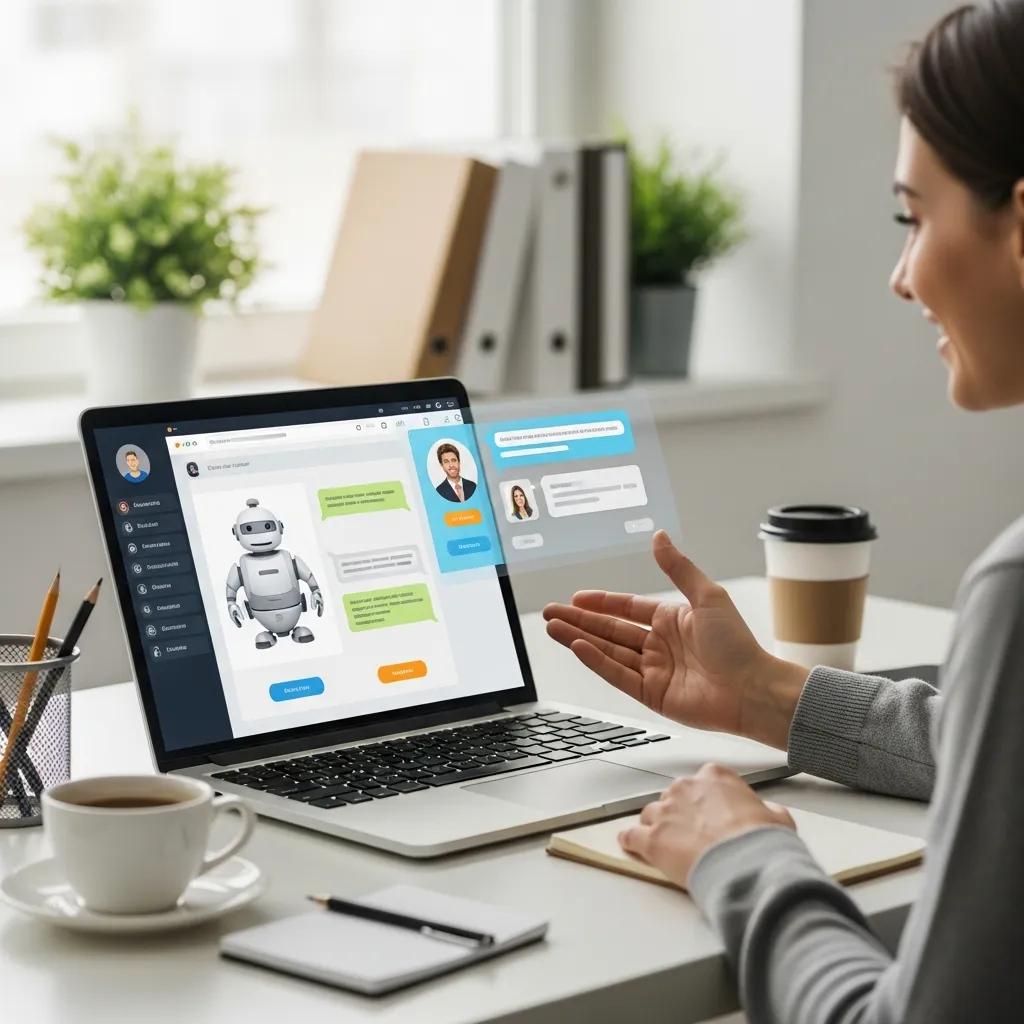
How to Automate Customer Support with AI Chatbots in 2024
How to Automate Customer Support with AI Chatbots in 2024: A Complete Guide to AI Customer Support Automation Software

In the rapidly evolving landscape of customer service, AI chatbots have emerged as a transformative solution for businesses looking to enhance their customer support operations. This comprehensive guide will delve into the mechanisms, benefits, and implementation strategies for automating customer support with AI chatbots in 2024. Readers will learn how these intelligent systems can streamline interactions, improve customer satisfaction, and reduce operational costs. As businesses face increasing demands for efficient service, AI chatbots offer a promising solution to meet these challenges. This article will cover the definition and functionality of AI chatbots, their benefits for small businesses, implementation steps, and best practices for successful integration.
What Is an AI Customer Support Chatbot and How Does It Work?
AI customer support chatbots are advanced software applications designed to simulate human conversation and assist customers in real-time. They utilize natural language processing (NLP) and machine learning (ML) technologies to understand and respond to customer inquiries effectively. By analyzing user input, these chatbots can provide accurate answers, guide users through processes, and even escalate issues to human agents when necessary. This capability not only enhances customer experience but also optimizes operational efficiency.
What Core Technologies Power AI Chatbots for Customer Service?
The core technologies that power AI chatbots include natural language processing (NLP) and machine learning (ML). NLP enables chatbots to comprehend and interpret human language, allowing them to understand context and intent. Machine learning algorithms help chatbots learn from interactions, improving their responses over time. For instance, a chatbot can analyze previous conversations to refine its understanding of common customer queries, leading to more accurate and relevant responses.
How Do AI Chatbots Differ from Traditional Chatbots in Customer Support?
AI chatbots differ significantly from traditional chatbots, primarily in their ability to learn and adapt. Traditional chatbots operate on predefined scripts, limiting their responses to specific queries. In contrast, AI chatbots leverage machine learning to continuously improve their performance, enabling them to handle a broader range of inquiries and provide personalized interactions. This adaptability allows businesses to offer a more engaging and efficient customer support experience.
What Are the Benefits of AI Customer Service Automation for Small Businesses?

AI customer service automation offers numerous advantages for small businesses, including enhanced efficiency, cost savings, and improved customer satisfaction. By automating routine inquiries, businesses can free up human agents to focus on more complex issues, ultimately leading to faster resolution times and a better overall customer experience. Additionally, AI chatbots can operate 24/7, ensuring that customers receive assistance whenever they need it.
- 24/7 Availability: AI chatbots provide round-the-clock support, allowing customers to receive assistance outside of regular business hours.
- Cost Reduction: Automating customer support can significantly lower operational costs by reducing the need for a large support team.
- Improved Customer Satisfaction: Quick and accurate responses from AI chatbots enhance the overall customer experience, leading to higher satisfaction rates.
For small businesses, these benefits can translate into increased customer loyalty and retention, ultimately driving growth and profitability.
How Does AI Automation Improve Customer Satisfaction and Reduce Costs?
AI automation enhances customer satisfaction by providing instant responses to inquiries, reducing wait times, and ensuring that customers receive accurate information. Studies have shown that businesses utilizing AI chatbots experience a significant decrease in operational costs, as these systems can handle a high volume of inquiries without the need for additional staff. For example, companies that have implemented AI chatbots report up to a 30% reduction in customer service costs while simultaneously improving response times.
In What Ways Do AI Chatbots Enhance Scalability and Personalization?
AI chatbots enhance scalability by managing multiple customer interactions simultaneously, allowing businesses to handle increased demand without additional resources. Furthermore, these chatbots can personalize interactions by analyzing customer data and preferences. For instance, an AI chatbot can recommend products based on a customer's previous purchases or browsing history, creating a tailored experience that fosters customer loyalty.
How to Implement AI Chatbots for Customer Support: Step-by-Step Guide for SMBs

Implementing AI chatbots for customer support involves several key steps that ensure a successful deployment. Small to medium-sized businesses (SMBs) can follow this guide to effectively integrate AI chatbots into their customer service strategy.
What Are the Key Steps in Planning and Deploying AI Chatbots?
- Define Objectives: Clearly outline the goals for implementing an AI chatbot, such as reducing response times or increasing customer satisfaction.
- Choose the Right Platform: Select a chatbot platform that aligns with your business needs and offers the necessary features for effective customer support.
- Design Conversational Flows: Create intuitive conversational flows that guide customers through common inquiries and issues.
- Test and Optimize: Conduct thorough testing to identify any issues and optimize the chatbot's performance based on user feedback.
How to Integrate AI Chatbots with CRM and Existing Support Systems?
Integrating AI chatbots with customer relationship management (CRM) systems and existing support platforms is crucial for seamless operations. This integration allows chatbots to access customer data, enabling personalized interactions. To achieve this, businesses should:
- Select Compatible Tools: Ensure that the chatbot platform is compatible with your existing CRM and support systems.
- Establish Data Sharing Protocols: Set up protocols for data sharing between the chatbot and CRM to maintain accurate customer records.
- Train Staff: Provide training for staff on how to utilize the chatbot effectively and understand its capabilities.
What Makes Softwired’s AI-Powered Webchat an Effective Customer Support Solution?
Softwired’s AI-powered webchat stands out as an effective customer support solution due to its advanced features and seamless integration capabilities. This platform leverages cutting-edge AI technologies to automate customer interactions, ensuring that businesses can provide timely and accurate support.
How Does Softwired’s Webchat Leverage AI to Automate Customer Interactions?
Softwired’s webchat utilizes natural language processing and machine learning to understand customer inquiries and provide relevant responses. By analyzing past interactions, the system continuously improves its performance, ensuring that customers receive accurate information quickly. This automation not only enhances customer satisfaction but also reduces the workload on human agents, allowing them to focus on more complex issues.
What Are the Specific Use Cases of Softwired’s AI Chatbot for Local Businesses?
Local businesses can benefit from Softwired’s AI chatbot in various ways, including:
- Appointment Scheduling: Automating appointment bookings and confirmations to streamline operations.
- Product Recommendations: Providing personalized product suggestions based on customer preferences and browsing history.
- Customer Feedback Collection: Gathering customer feedback through automated surveys to improve services.
These use cases demonstrate how Softwired’s AI chatbot can address the unique needs of local businesses, enhancing their customer support capabilities.
What Are Best Practices and Metrics for Successful AI Customer Support Automation?
To ensure the success of AI customer support automation, businesses should adhere to best practices and track relevant metrics. This approach helps optimize chatbot performance and improve customer interactions.
How to Ensure Smooth Human-Agent Handoff and Data Privacy?
A smooth human-agent handoff is essential for maintaining customer satisfaction. Businesses should implement protocols that allow chatbots to seamlessly transfer complex inquiries to human agents when necessary. Additionally, ensuring data privacy is crucial; businesses must comply with regulations such as GDPR and CCPA and protect customer information during interactions.Which KPIs and Analytics Measure AI Chatbot ROI and Performance?
Key performance indicators (KPIs) for measuring AI chatbot performance include:
- Response Time: The average time taken by the chatbot to respond to customer inquiries.
- Customer Satisfaction Score: A measure of customer satisfaction based on feedback collected after interactions.
- Cost Savings: The reduction in operational costs attributed to the implementation of the chatbot.
Tracking these metrics allows businesses to assess the effectiveness of their AI chatbot and make informed decisions for future improvements.
What Are Future Trends and Advanced Concepts in AI Customer Service Automation?
As technology continues to evolve, several trends are shaping the future of AI customer service automation. Businesses must stay informed about these developments to remain competitive.
How Will Generative AI and Voice AI Transform Customer Support?
Generative AI and voice AI are set to revolutionize customer support by enabling more natural and intuitive interactions. Generative AI can create personalized responses based on customer data, while voice AI allows customers to interact with chatbots using voice commands. This shift towards more conversational interfaces enhances the overall customer experience and makes support more accessible.
What Role Does Proactive Engagement and Predictive Analytics Play in AI Chatbots?
Proactive engagement and predictive analytics are becoming increasingly important in AI chatbots. By analyzing customer behavior and preferences, chatbots can anticipate customer needs and offer assistance before inquiries are made. This proactive approach not only improves customer satisfaction but also fosters a sense of loyalty, as customers feel valued and understood.
| Benefit | Description | Impact Level |
|---|---|---|
| 24/7 Availability | AI chatbots provide round-the-clock support, ensuring customers receive assistance anytime. | High |
| Cost Reduction | Automating customer support reduces the need for extensive human resources, lowering operational costs. | High |
| Improved Customer Satisfaction | Quick and accurate responses enhance the overall customer experience, leading to higher satisfaction rates. | High |
This table summarizes the key benefits of AI customer service automation, highlighting its significant impact on business operations and customer satisfaction.
In conclusion, automating customer support with AI chatbots presents a valuable opportunity for businesses to enhance their service offerings. By understanding the core technologies, benefits, and implementation strategies, companies can effectively leverage AI to meet the evolving demands of their customers. As the landscape of customer service continues to change, embracing these innovations will be crucial for sustained success.